

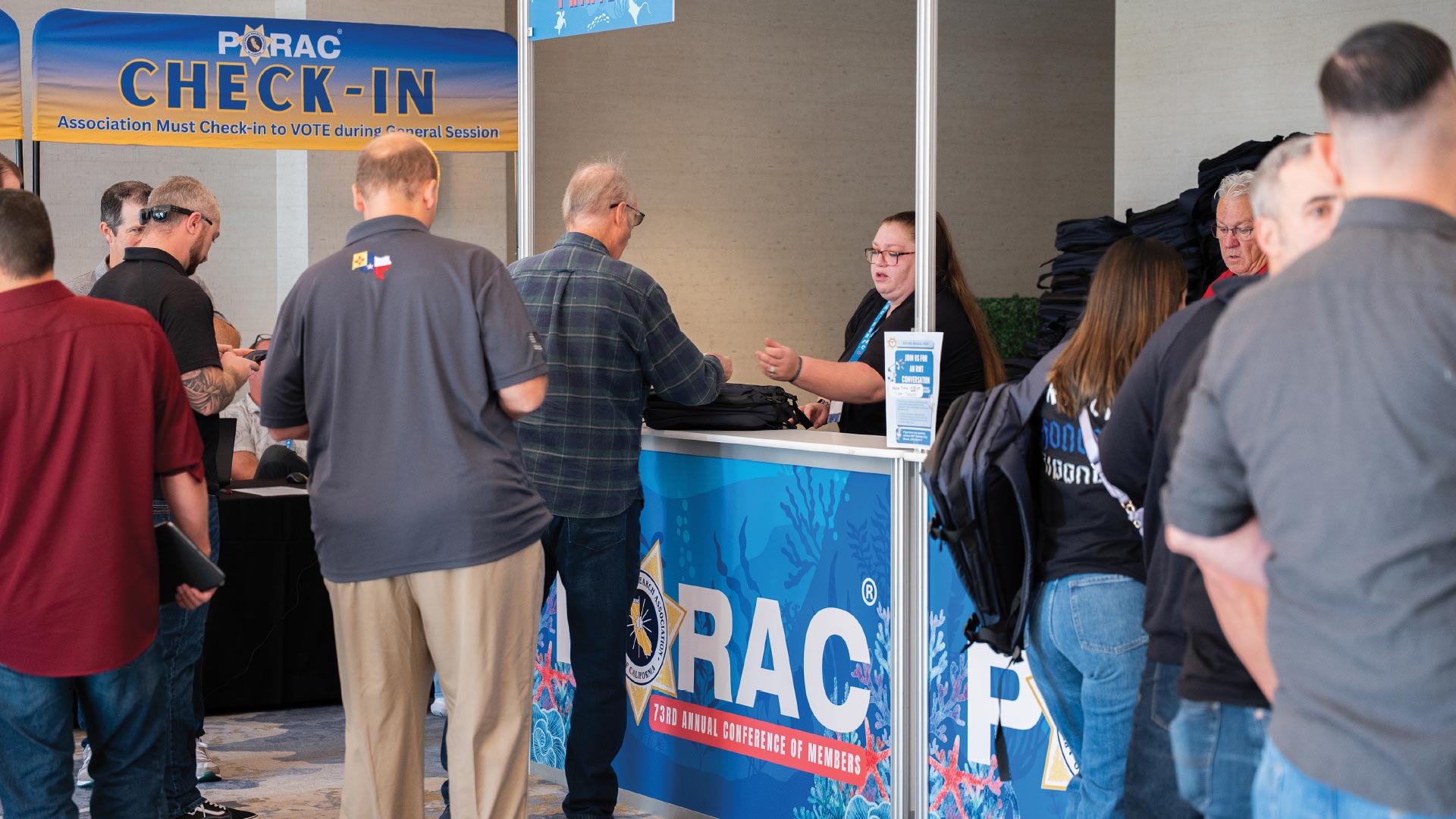
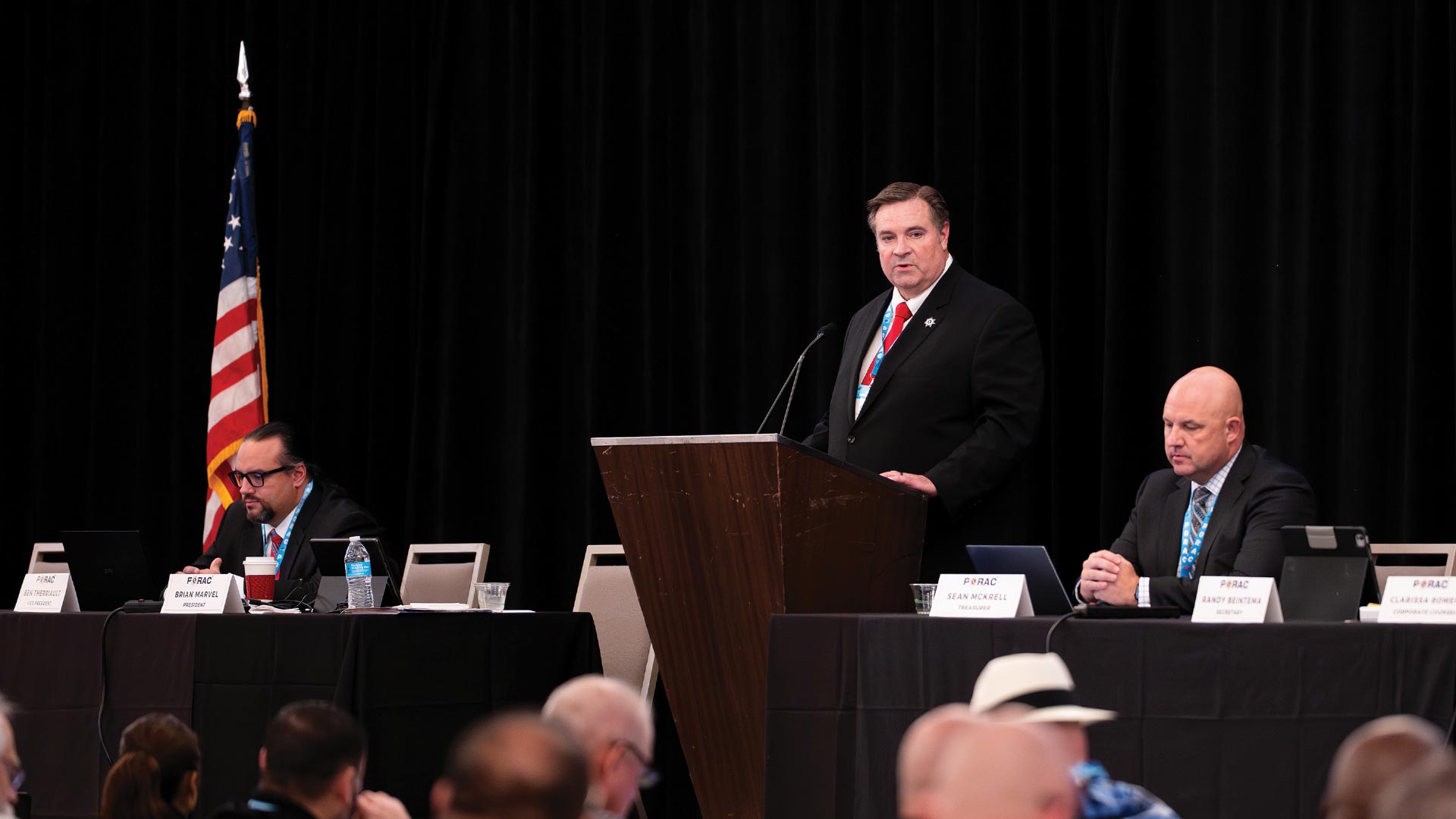


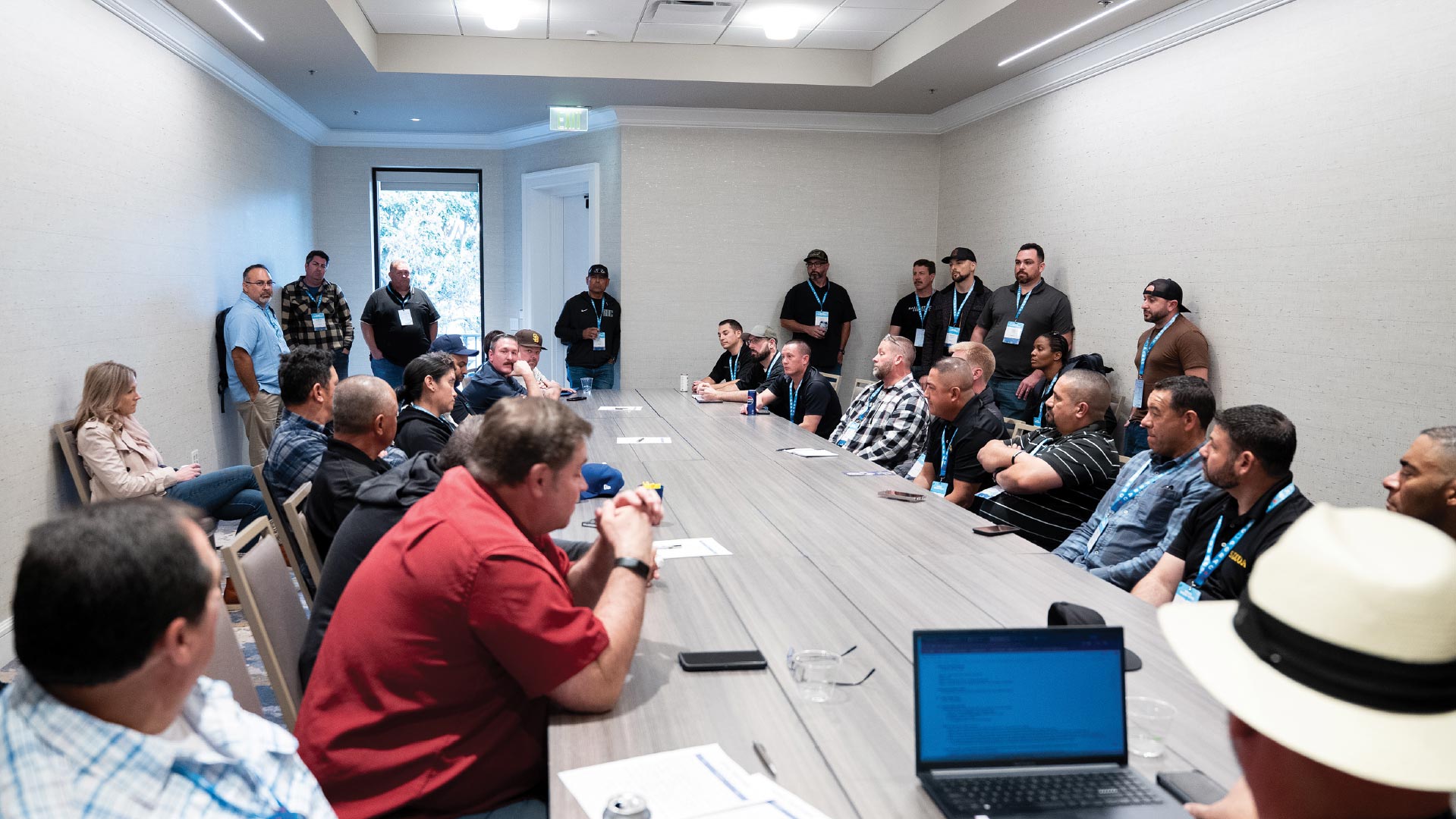
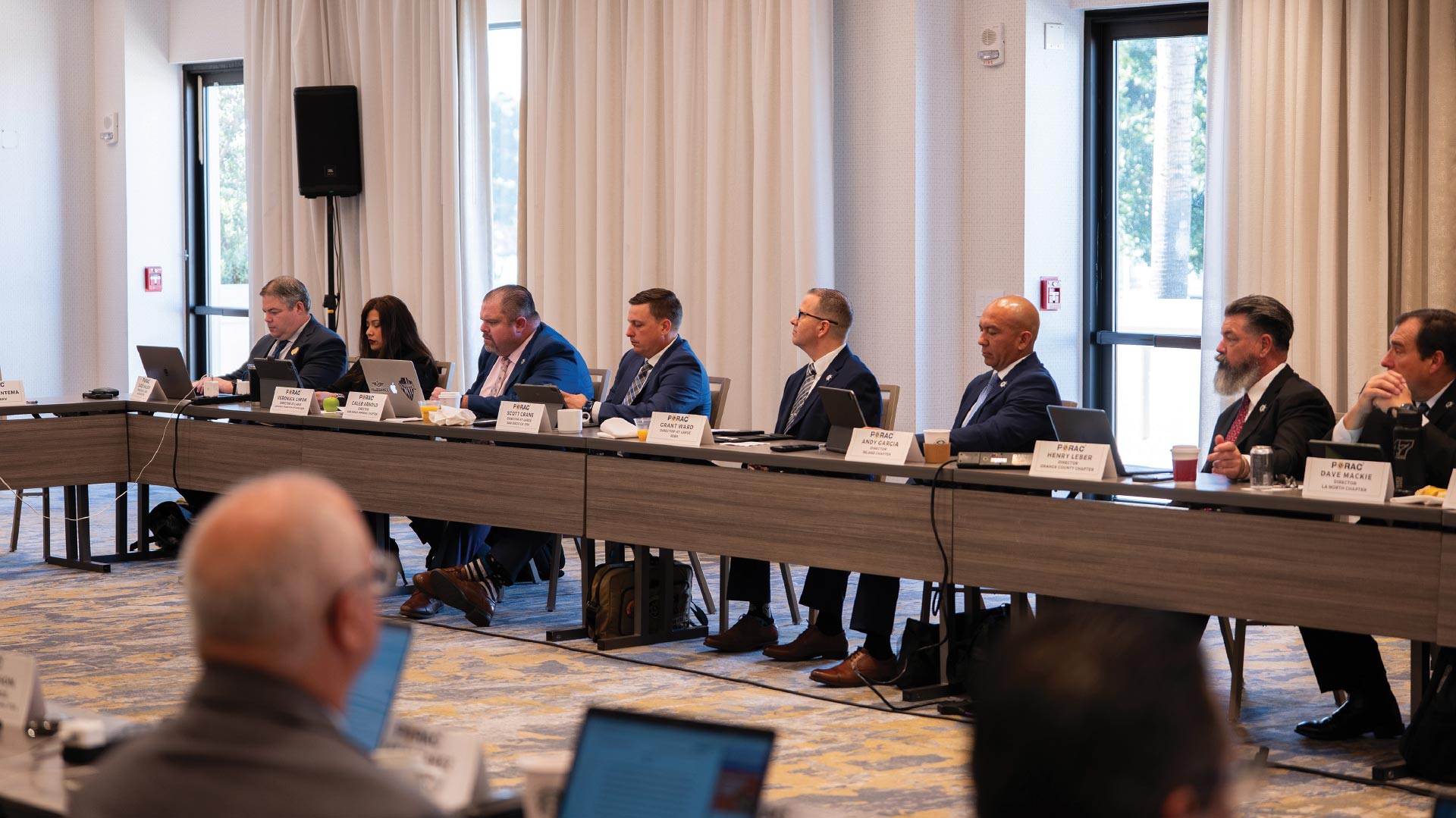


A total of 715 delegates representing 177 associations made their way to San Diego, braving unseasonably stormy fall weather to attend the 73rd annual PORAC Conference of Members November 20–22 at the Sheraton Resort. Members cast their ballots in contested elections for president and vice president, voted on bylaw amendments, received updates from PORAC’s trusts and partners, took part in an SB 2 training session, met with sponsors, toured 60 vendor booths at the exhibitor expo and connected with fellow peace officers from across the state.
Friday, November 21, General Session
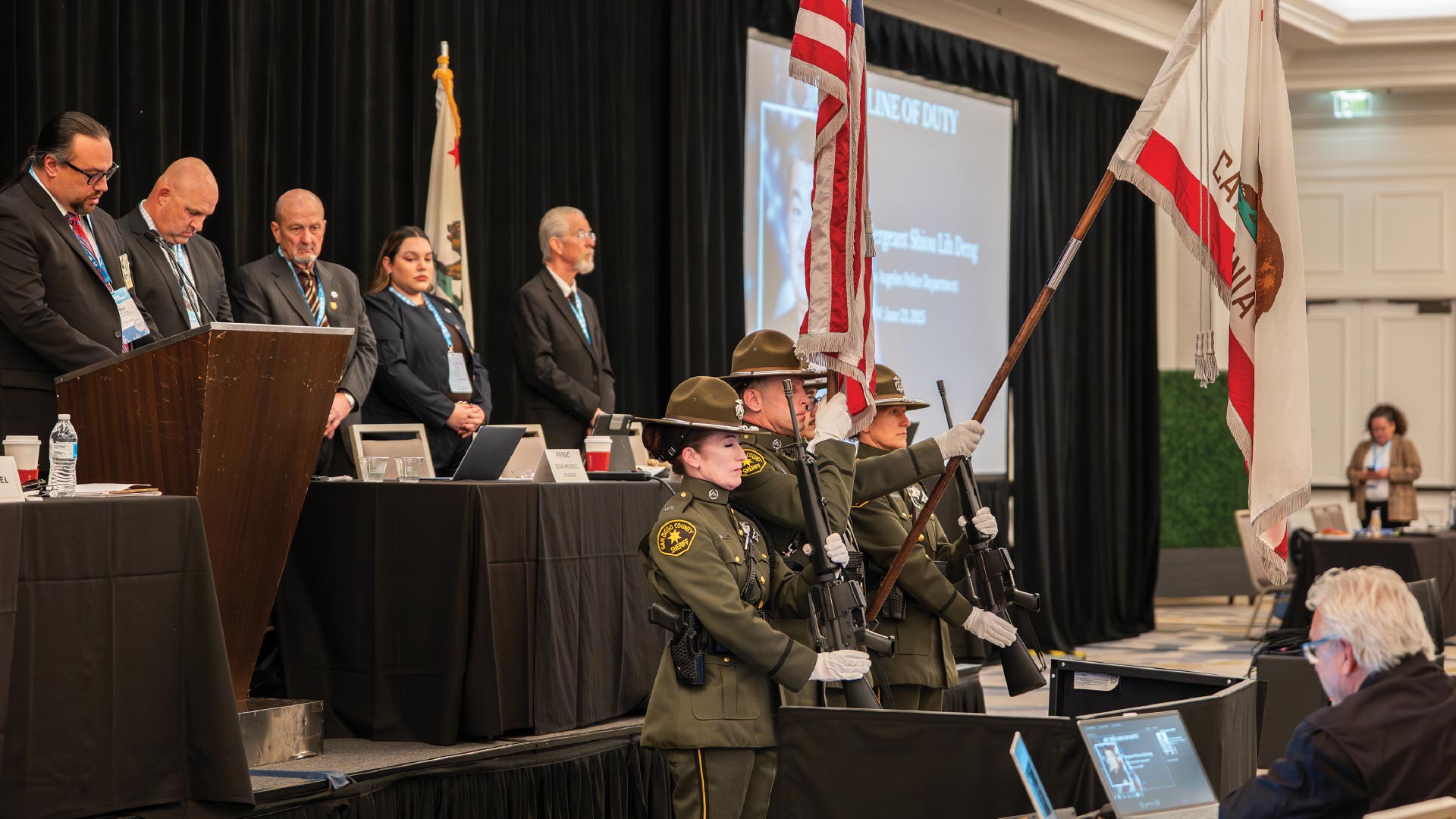
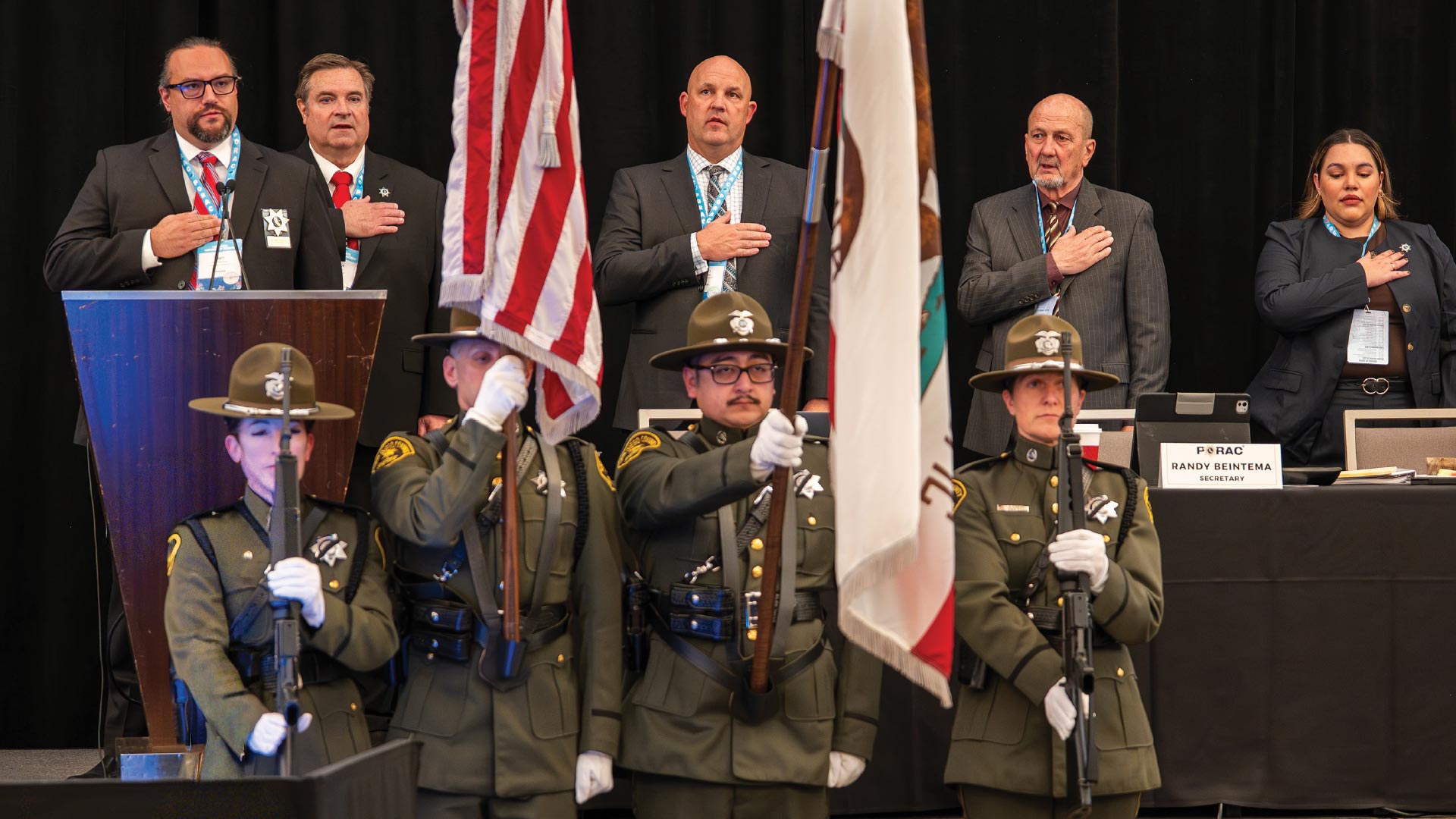
The session began with the presentation of colors by the San Diego County Sheriff’s Office Honor Guard. Vice President Ben Therriault led the Pledge of Allegiance and read the names of California’s 2025 fallen heroes, followed by a moment of silence and an invocation by San Diego Police Chaplain Chuck Price. The Conference co-chairs, Region III Executive Committee members Marshall McClain and Justin Doering, welcomed attendees and expressed gratitude to PORAC staff for helping plan and coordinate the event.
Announcements: President Brian Marvel thanked the Conference sponsors for their generous support and acknowledged the recipients of the Small Association Awards: Foothill–De Anza Community College POA (Region I), China Lake POA (Region II), L.A. Police Command Officers Association (Region III) and Brawley Police Sergeants Association (Region IV). Secretary Randy Beintema provided information about the elections for president and vice president and the debate taking place later in the afternoon.
President’s Report: President Marvel reflected on PORAC’s immense growth over the past 73 years, including its trusts. He announced that IBT will go national with a health care plan beginning next year, making PORAC the only law enforcement organization in the country to offer a nationwide legal defense plan, retiree medical trust and now an insurance benefits plan. “There’s no other organization in the U.S. that can say that,” he remarked. “We built a strong benefits package with each one of [our] trusts, and we’re never done making it better, improving it and making it smarter.”
On the legislative front, he discussed PORAC’s revamped Policy Platform, which has become a key resource for legislators on law enforcement issues. He also highlighted successes in Sacramento, where five PORAC-sponsored bills were signed into law, and touched on SB 627’s ban on face coverings for law enforcement, noting its ramifications at both the state and local level and how PORAC will be working to amend the bill next year. At the federal level, he said that the passage of the Social Security Fairness Act was one of PORAC’s biggest achievements in recent years, thanks to the collaboration of the West Coast Law Enforcement Coalition, which will now evolve into the American Law Enforcement Alliance, a 501(c)(4) that will enable expanded lobbying activities in Washington, D.C.
Marvel also emphasized that PORAC’s “communications game has never been stronger,” citing numerous research briefs, informative On the Job With PORAC podcast episodes, increased social media reach, updated brochures and fact sheets, and more to keep members informed.
He concluded by outlining priorities for 2026, which include fixing SB 627, amending the Public Employees’ Pension Reform Act (PEPRA), eliminating the Racial and Identity Profiling Act (RIPA), growing the organization to 100,000 members, and improving and modernizing communications. He underscored that none of the year’s accomplishments would have been possible without PORAC’s staff, legislative and communications teams, and members, whose dedication helps move the organization forward.
Racial and Identity Profiling Advisory Board Report: Rich Randolph, PORAC’s representative on the RIPA Board, offered a sneak peek of the 2026 RIPA Board Report, which will be released in two parts on January 1 and January 31. The first part will publish raw data provided by agencies, while the second will include additional California DOJ analysis of that data. Some of the board’s recommendations include having the DOJ develop and implement a stop-data dashboard; legislation prohibiting or limiting police agencies from relying on oversaturation to police marginalized communities; legislation to allocate resources to study and make further recommendations on whether alternative enforcement technologies exacerbate existing bias; and legislation to prohibit pretextual stops. Randolph said that while the report is “one of the largest overreaches the board has ever made,” it highlights the disconnect between the board and the reality of policing in California. He anticipates that lawmakers will see how much time and resources agencies are pouring into RIPA reporting and realize that reform is needed.
Vice President’s Report: Vice President Therriault reported that PORAC has 86,930 members across 963 associations — an increase of more than 4,000 members from last year. He declared that the growth reflects the confidence members have in PORAC, in “the benefits we provide, our strength and what we’re bringing to the table.” This past year, Therriault continued to support associations across all 15 chapters, from the largest metropolitan agencies to the smallest rural departments, noting that he’ll go anywhere in the state for members in need. He urged everyone to stay active at the chapter level, emphasizing that local issues can quickly become statewide and that staying connected, strong and ready to engage allows members to define the narrative rather than letting others do it for them. “United is what gets us to where we need to be,” he said.
Treasurer’s Report: Treasurer Sean McKrell stated that PORAC’s finances have grown across the board during his first year as treasurer. He also recounted his experience transitioning to the role, sharing that there was a learning curve but that the support of his predecessor, Nick Odenath, and guidance from COO Kim Busman and others helped him through. McKrell added that he’s been able to go beyond his primary duties and support Marvel and Therriault with legislative advocacy. For 2026, he noted that the passage of proposed bylaw amendment #1 would allow new money into PORAC to ensure the organization can sustain itself for the next several years. Lastly, he encouraged members to attend the Association Treasurer 101 course that he instructs alongside Busman and Region I Director-at-Large Damian Evans.
Investment Report: Senior Vice President/Portfolio Manager Mark Sikorski and Financial Advisor/Managing Director Gino Stumpo of UBS reported that as of November 12, PORAC had $7.4 million in invested assets. Year to date, the account is up 14.64%, compared to 13.29% last year, with 25% in bonds/fixed income. The pension account has over $12 million, which is invested in an institutional money market and is very safe. Stumpo provided an overview of fixed, variable and index annuities, pointing out that first responders have increasingly become targets for insurance companies and their representatives. He noted that annuities are often misunderstood because they blend insurance with mutual fund components. Sikorski added that many of the people selling them are not registered or licensed.
Bylaws Presentation: Secretary Beintema provided an overview of the proposed bylaw amendments:
- Dues: Beginning January 1, 2027, dues for active members will increase $0.50 in odd-numbered years, in perpetuity; includes a provision that the Board of Directors reevaluate the dues increase structure a minimum of every five years.
- Dues: Beginning January 1, 2027, dues for Retired Associate Membership (RAM) will increase $2.50 for four years, and on January 1, 2032, it becomes 40% of active member dues, rounded up to the nearest quarter.
- Officers/Board of Directors/Executive Committee: Gives the Specialized Police Associations Coalition (SPAC) a seat on the Executive Board.
- Elections/Appointments: A Statewide Chapter Executive Committee member will be elected every two years, in odd-numbered years, by a majority of the votes cast by eligible active members within the Statewide Chapter.
- Proposal number five was withdrawn by the maker prior to the general session.
- Voting: RAM members will be entitled to cast no more than one vote for every four eligible members, not to exceed 2,500 votes.
- Trusts and Standing Committees: Gives the SPAC director at the executive level the ability to vote at Board of Directors and Executive Committee meetings.
LDF Report: Chairman Rudy Bojorquez reported that LDF has more than 160,000 members within 2,271 associations nationwide and currently has 131 criminal cases pending, including 48 in California. He said that LDF maintains a stable fund of just over $76 million, and added that as of August, UBS is now handling its investments. Bojorquez explained that robust financials are necessary to not only cover legal fees, but also hire experts and obtain other resources to assist members with their cases, adding that the Fund has paid over $15 million in benefits this year alone. He concluded with an overview of three high-profile LDF cases in Memphis, Tennessee; Grand Rapids, Michigan; and San Rafael, California.
IBT Report: Chairman Roger Garcia highlighted IBT’s significant accomplishments and steady growth, noting that the Trust recently paid off its headquarters building and that the health and disability plans now serve 30,250 and 22,473 participants, respectively. Recruitment and Retention Manager Damon Kurtz discussed the transition from Myers-Stevens & Toohey and IBT’s move to administer short- and long-term disability plans in-house, explaining that the success of the health plan gave trustees and staff the confidence to take on the challenge. He added that, due to inflation and other factors, a rate increase is expected in the second quarter of 2026, though bringing services in-house will ultimately produce cost savings for the Trust. He concluded by outlining the non-CalPERS health plan to be introduced next year, which he anticipates will attract additional members and expand both the IBT and overall PORAC brand nationally.
RMT Report: Chairman Terry Moore reported that the RMT, which he says began with “virtually nothing 17 years ago,” has steadily grown to $181 million with about 9,400 contributors. He outlined the trustees’ decision to transition RMT’s third-party administrator from Vimly Benefit Solutions to Benefit Programs Administration. The change, which includes updates to the RMT website, is underway and expected to be completed in the first quarter of 2026. Moore assured members that the plan itself will remain the same and encouraged them to contact trustees with any questions.
SPAC Report: Chairman Jim Bock highlighted the landmark passage of SB 8, which extends 4850 benefits to Sacramento County park rangers for the first time. He said this milestone demonstrates the Legislature’s recognition that specialized public safety professionals deserve the same statutory benefits as their mainstream law enforcement counterparts. He also credited the efforts and advocacy of Sacramento County Criminal Justice Employees Union President Randy Bickel as instrumental to the bill’s passage. Looking ahead, Bock said SPAC will continue to advocate for and pursue policies that secure equitable treatment for its members statewide.
RAM Report: Chairman Chris Coulter explained that RAM serves as the gateway for retired members to continue accessing the benefits of PORAC membership, welcoming members to join its approximately 10,000 retirees nationwide upon concluding their careers. He also underscored PORAC and RAM’s role in the successful passage of the Social Security Fairness Act and their advocacy for several other bills pertinent to retirees, including the Retired Law Enforcement Officers Continuing Service Act, Chief Herbert D. Proffitt Act and LEOSA Reform Act.
Training Report: Training Coordinator Cathy Knape reported that training courses saw a 95% attendance rate this year, with 571 registrations across 19 offerings. She also noted that the Training Committee has doubled in size — from six to 12 members — to support future course planning. Knape encouraged more small associations (under 30 sworn) to apply for Labor Relations Program (LRP) Grants, which help offset the cost of sending members to training. She spotlighted PORAC’s partnerships throughout the year, including collaborations with POST on SB 2 updates, as well as with Force Science, Calibre Press and others. Knape announced that Symposium 2026 will be held April 22–23 at the Pechanga Resort Casino in Temecula, and that registration is open for both that event and for 2026 Institute courses.
Peace Officers Relief and Education Foundation (POREF) Report: Executive Committee member Mike Pruger shared that $288,400 was raised for POREF to support scholarship, relief and memorial efforts. The Scholarship Committee, in which Pruger serves as Region I representative, selected 40 students to receive $2,000 scholarships this year; however, he noted that many applicants had used AI in their essays, resulting in the disqualification of about 50% of applications. He reported that Fund a Hero has raised over $6.5 million and said the program gives every member an opportunity to give back to members and their families in need. He announced that the 2026 POREF Open will be held on April 8 at the Eagle Springs Golf Course in Friant and that registration is now open, adding that last year’s event raised $40,000.
Saturday, November 22, General Session
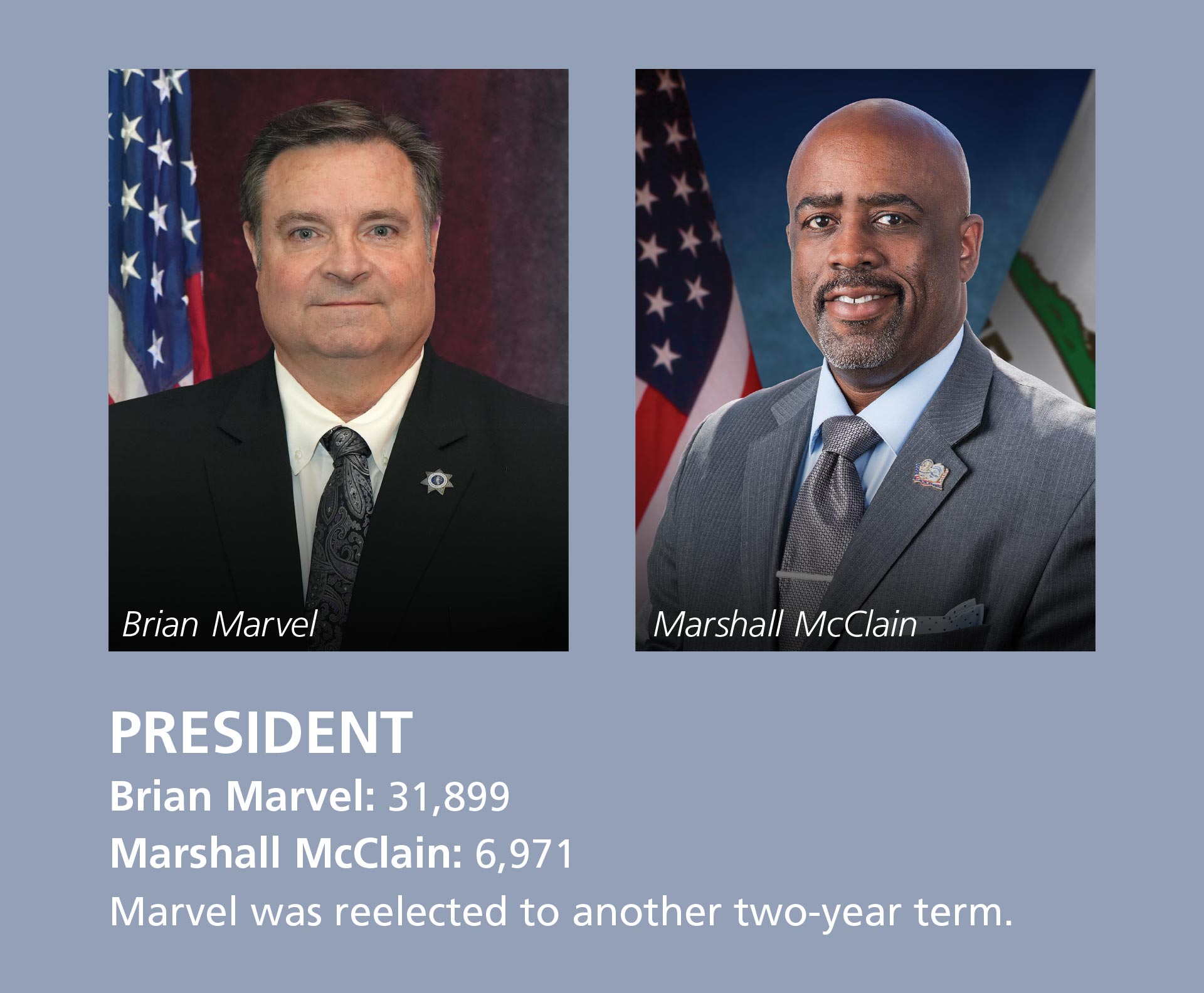
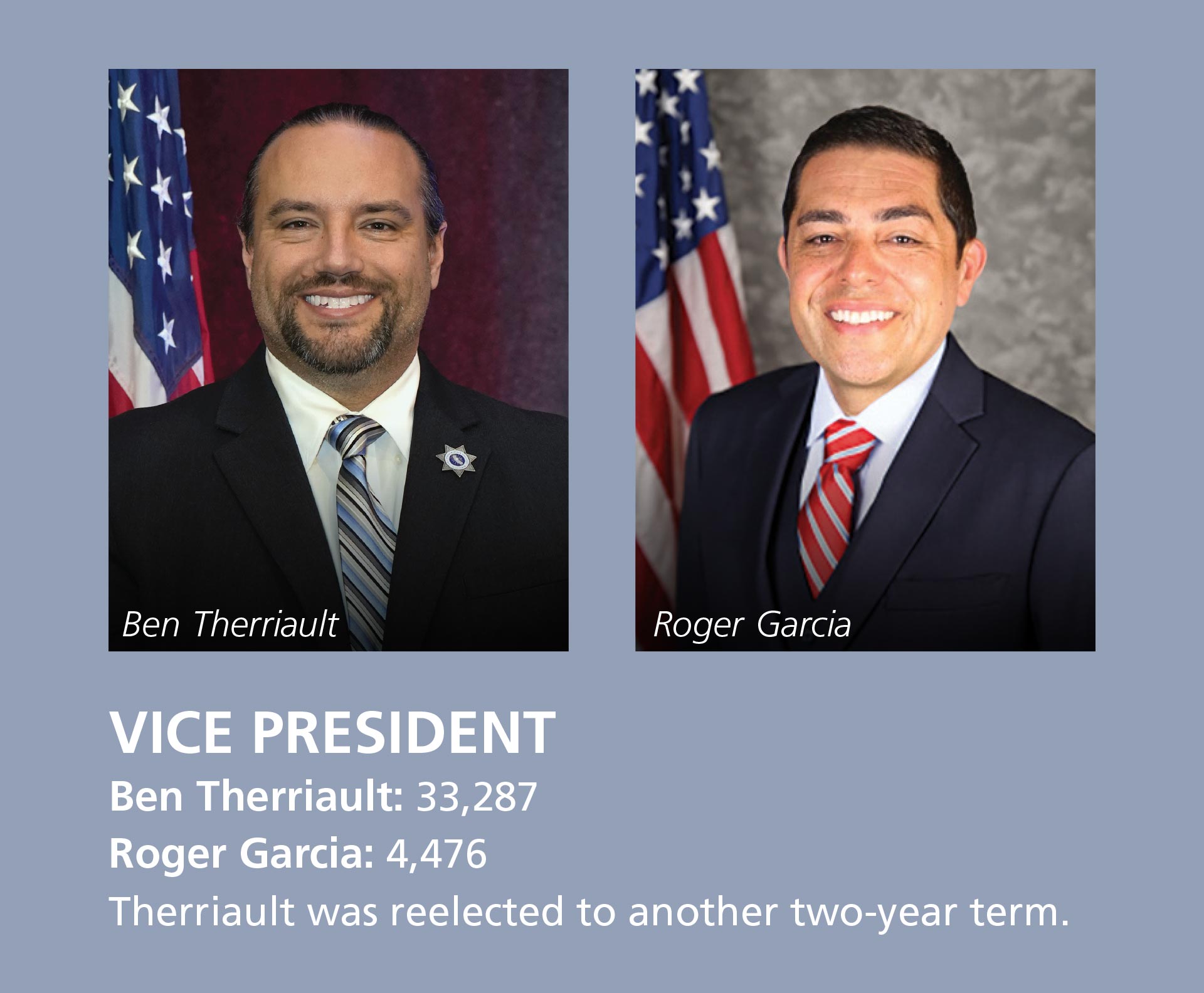
Election of President and Vice President: Marvel was reelected as president, defeating challenger Marshall McClain by a vote of 31,899–6,971. Therriault was also reelected as vice president, receiving 33,287 votes to opponent Roger Garcia’s 4,476. Marvel thanked the membership for their confidence in him, congratulated Therriault and recognized McClain’s and Garcia’s efforts. “When you have these elections, it actually improves the organization, because you get to hear some different voices, a different perspective. … Hopefully, we can take some of the stuff that they brought forward and try to implement it to make the organization even better,” Marvel said.
Bylaws: The six bylaw amendments were voted on by region by voice vote; amendments #1, #3, #4 and #7 received unanimous approval, while #2 and #6 were supported by all regions except RAM. They will go into effect on January 1.
State Legislative Report: Randy Perry of Perry Strategies reported that of the more than 2,800 bills introduced in 2025, PORAC tracked over 280 and took positions on more than 100. He discussed SB 627 at length and explained how many lawmakers were responding to federal immigration enforcement in California with similar gut-and-amend bills that inserted immigration-related issues. Perry noted that the bill author’s intent was to target federal employees; however, PORAC’s message was that California peace officers are not federal agents and do not enforce immigration. The governor ultimately signed the bill but committed to PORAC that he would amend it in the new year. Additionally, Perry provided an overview of PORAC-sponsored bills signed into law, including SB 459, SB 734 and AB 992. He also highlighted key opposition efforts on proposals seeking to bypass Prop 36 (AB 1231), limit officers’ ability to request consent searches (SB 277), change parole eligibility rules (AB 622) and more. He discussed opposition bills that were signed into law but that PORAC helped make less harmful, including those addressing family member interrogations (AB 572), AI in police reports (SB 524) and other issues. Perry noted that top priorities for 2026 include fixing SB 627, reforming PEPRA and amending RIPA.
Federal Legislative Report: Darryl Nirenberg and Rowan Bost of Steptoe reported that PORAC has become a leading voice for West Coast law enforcement in Washington, D.C., evidenced by a successful year with several major policy victories, including the passage of the Social Security Fairness Act and the HALT Fentanyl Act. They also discussed PORAC-endorsed legislation with opportunities to advance, such as the LEOSA Reform Act and the Law Enforcement and Crime Victims Support Package attached to the National Defense Authorization Act. Additionally, they highlighted PORAC’s leading role in pushing for meaningful and commonsense reforms to the DOJ consent decree process; advancing legislation addressing recruitment and retention challenges; securing permanent tools to combat the fentanyl crisis; informing AI policy related to law enforcement; and more. They recapped PORAC’s coalition-building efforts in D.C., including fly-ins and ad hoc meetings throughout the year. This advocacy has amplified West Coast law enforcement voices at the federal level and will continue to grow with the creation of a 501(c)(4) organization, enabling the coalition to expand lobbying, endorse candidates, manage political initiatives and more.
Communications Report: Kendall Klingler and Melanie Tuberman of Fiona Hutton and Associates reflected on their partnership with PORAC since 2018, which has provided a platform to advance legislative objectives in Sacramento and D.C. Klingler reminded members that there’s strength in numbers, encouraging them to act whenever PORAC sends action alerts containing prewritten emails for legislators. She shared that 700 letters were sent in a single day opposing SB 627 and expressed her desire to mobilize even more voices in the future. Tuberman highlighted how PORAC’s research briefs have helped establish the organization as a thought leader on best practices and labor in law enforcement. She added that these briefs have increased media attention, with PORAC mentioned in over 1,000 news stories this year, generating more than 1.42 billion impressions, with a total publicity value of nearly $16 million. Additionally, she noted that FHA has revamped PORAC’s member materials to better communicate the organization’s mission and goals. She also discussed PORAC’s growing online presence through eblasts, social media accounts and the On the Job With PORAC podcast.
Concerns of Police Survivors (C.O.P.S.) Report: National C.O.P.S. Executive Director Dianne Bernhard reported that the organization has 87,000 members across 53 volunteer-run chapters nationwide, composed of survivor families and co-workers of officers who have died in the line of duty. She outlined the many resources C.O.P.S. provides to survivors, including various weekends and camps, college scholarships, benefits assistance and peer support. Bernhard noted that the organization now serves suicide survivors; if an officer’s death can be tied to the trauma of the job, their families are eligible for support services. She also detailed how the organization helps survivors navigate National Police Week ceremonies, which drew 5,200 attendees this May. She announced that next year’s Surviving to Thriving Conference will be brought to California for the first time. She closed by thanking PORAC — whose lifetime giving to C.O.P.S. totals nearly $220,000 — for its support and shared that she will be retiring in 2026 after 12 years with the organization, stating that being a part of it “has been the honor of my life.”
California Peace Officers’ Memorial Foundation (CPOMF) Report: CPOMF Executive Director Mark Nichols lamented that it has been a difficult year for California law enforcement, with 12 officers who died in the line of duty in 2025 and one from the distant past slated to be honored at the 48th annual California Peace Officers’ Memorial ceremonies, May 3–4, 2026. He provided an overview of CPOMF’s role in maintaining the memorial, hosting the ceremony, administering a scholarship program for survivors and providing financial assistance to peer support groups and the families of the fallen. Nichols also previewed the monument expansion project, which will better utilize the grounds by incorporating elements such as pillars to accommodate names for the next 100 years and benches for families to sit and reflect. CPOMF hopes to complete the project by the 50th annual ceremonies in May 2028. He concluded by encouraging members to attend the ceremonies each year to show support for the families of the fallen.
Commission on Peace Officer Standards and Training (POST) Report: California POST Executive Director Manny Alvarez discussed issues that POST will be addressing in 2026. He began with Regulation 10005, which sets the minimum training standards for all peace officers in the state, and explained how POST plans to modify the regulation to create three academies: the police academy for general law enforcement, a specialized investigators basic course for investigative agencies (e.g., district attorneys) and PC 832 for officers under that category. He then detailed the pilot program to expand the PC 832 firearms course, increasing training from 24 to 52 hours and adding enhanced combat shooting tests, including low-light scenarios. Finally, Alvarez addressed public safety issues related to the 2028 Olympics and Paralympics, noting that the state will likely develop a mechanism — through legislation, regulation or executive order — to bring in out-of-state peace officers to support those events.
With no further business, President Marvel adjourned the session, in memory of Alhambra Police Officer Alec Sanders (EOW: November 20, 2025), concluding yet another eventful Conference of Members.
Installation Dinner
President Marvel presented the Mike Cavallero Lifetime Achievement Award to RMT Chairman Terry Moore and Executive Committee member Marshall McClain for their steadfast dedication to the organization. He also presented Randy Bickel, president of the Sacramento County Criminal Justice Employees Union, with the Kenny Joseph Memorial Award for his outstanding contributions to PORAC throughout the year, acknowledging his work in helping Sacramento park rangers gain 4850 benefits. Lastly, Bob Bonsall, who is retiring this year, was recognized with an award for his many years of service as PORAC’s corporate counsel. In his acceptance speech, Bonsall called working alongside the organization since the 1980s an honor and a great privilege of his professional career.
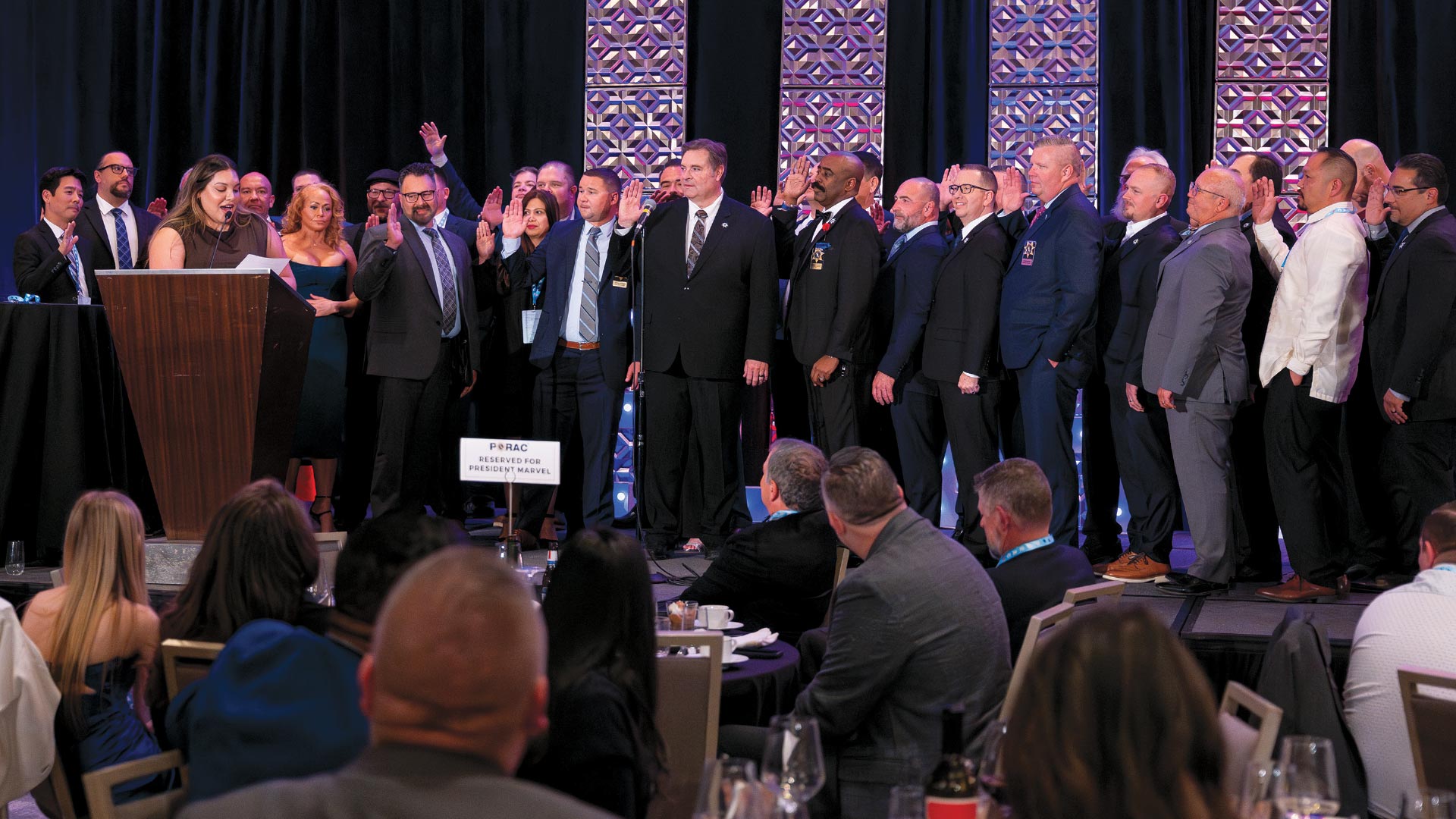
Following the swearing-in of PORAC’s new and returning directors and trustees for the next year, comedian and actor Tom Papa closed out the evening, bringing the house down with his witty, irreverent humor and storytelling.


Election Results
Training
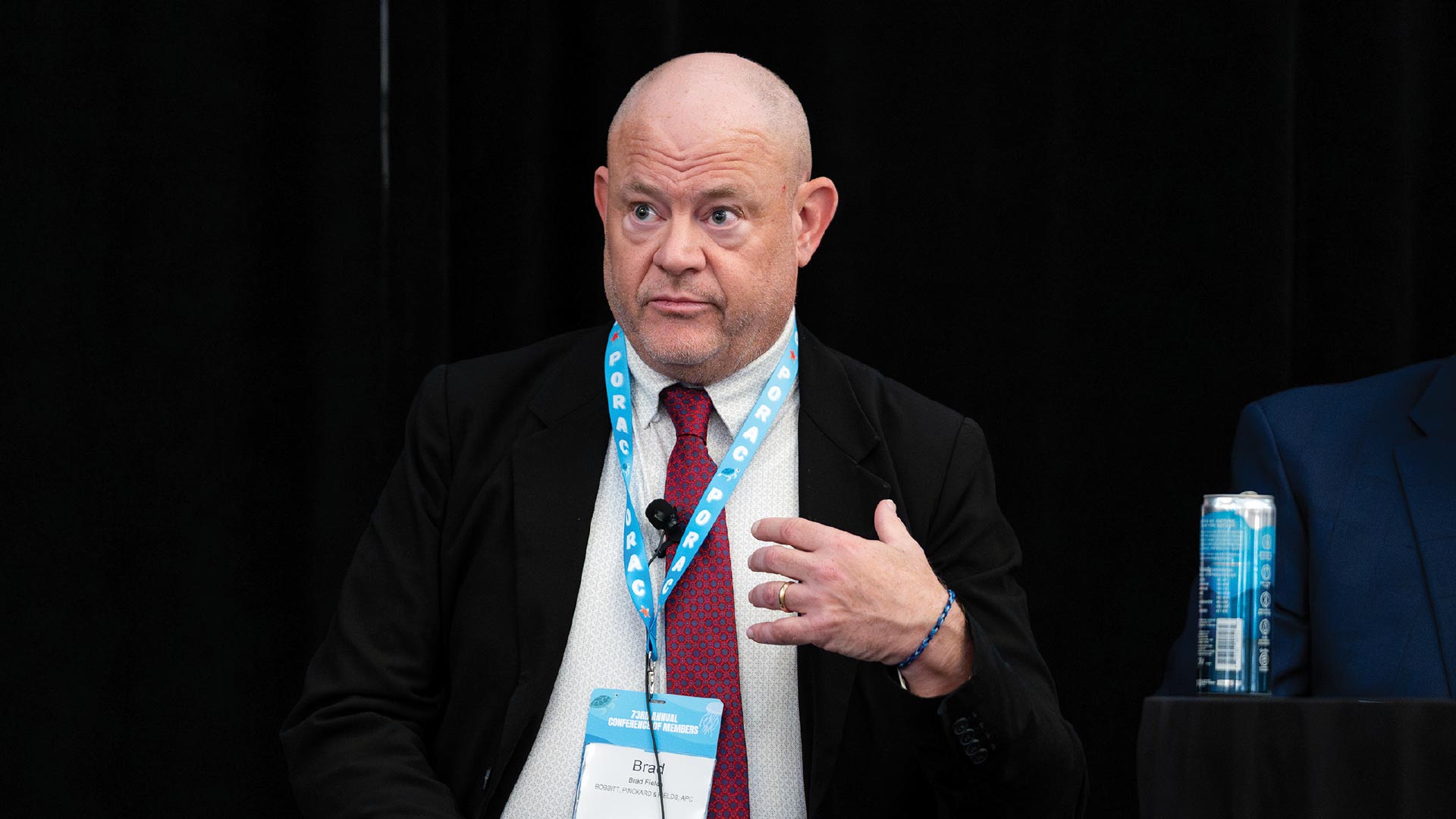
On Saturday afternoon, members attended an informative panel discussion focused on all things SB 2, legislation that allows POST to decertify or suspend peace officers who have committed serious misconduct. The panel of experts included attorney Tim Talbot of Rains Lucia Stern St. Phalle & Silver, POST Central Region Bureau Chief Brian South, attorney Alison Berry Wilkinson of Messing Adam Jasmine & Shore, PORAC Executive Committee member and POST Commissioner Justin Doering, attorney Brad Fields of Bobbitt Pinckard & Fields, POST Central Region Investigator Kevin Sherburne and attorney David Mastagni of Mastagni Holstedt. Vice President and POST Commissioner Therriault moderated the discussion, asking panelists member-submitted questions that covered topics such as possible amendments to the legislation, the decertification process, how POST investigates allegations of serious misconduct and more. Each panelist shared differing opinions and perspectives on SB 2 and engaged in robust conversations, giving attendees a deeper understanding of this critical and complex legislation affecting peace officers in the state.